
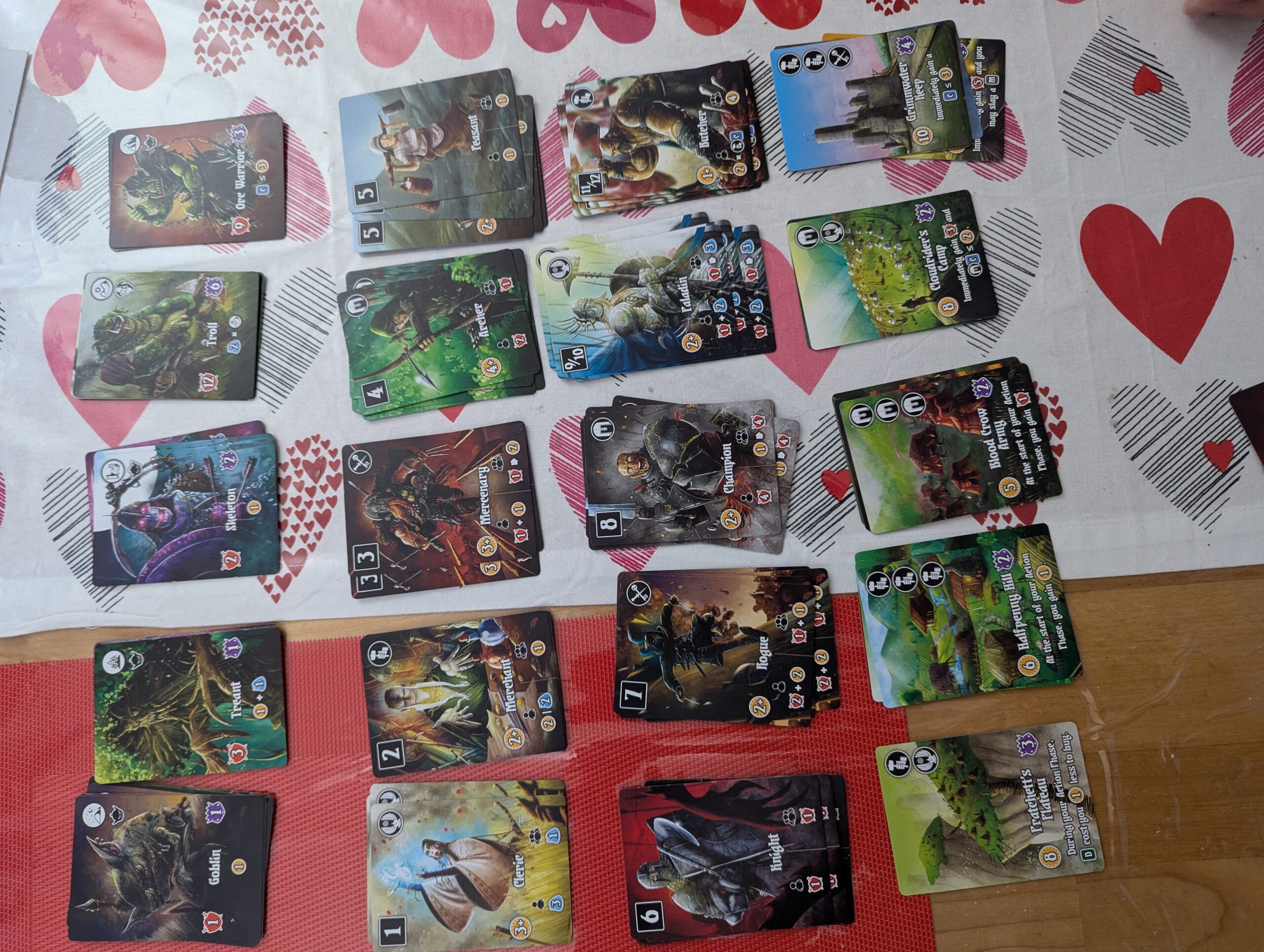
Some games I discover organically through word of mouth, playing over at a friend’s, or stumbling across at a friendly local game store and deciding to give it a shot. Other games I discover through the less than savory process of being advertised to by an algorithm that, while blind, stupid, and dumb, is just canny enough to know what causes my heartrate to elevate and my eyes to dilate just enough to prompt questionable financial decisions. Valeria was one such game and maybe even one of the earliest games that slid into my peripheral vision and gave me pause. Without anything but vibes to recommend it I ordered a copy and it has been a fantastic go to game over the last decade which is good news for advertisers and bad news for my wallet as behavior that’s rewarded is repeated.
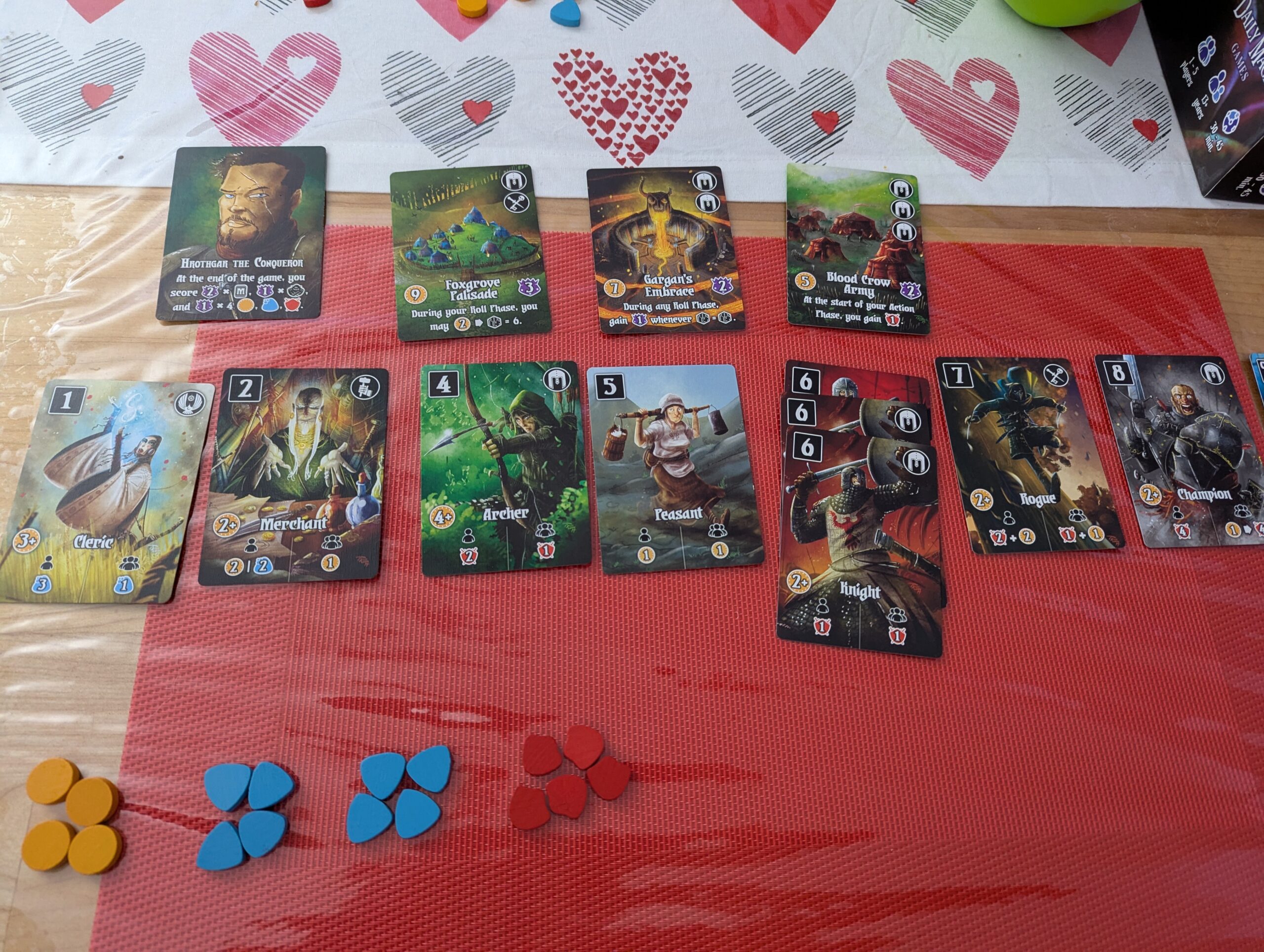
The game for all its fantastical beasts and locales is in essence and economic engine builder. Everything you want to do takes either money or power in the form of tokens and you acquire them every turn (yours and your opponents) by rolling dice and checking your ever growing tableau. At the start of the game, all you have to recommend your prowess is one peasant and one knight who will toss you one measly coin if you or an opponent rolls a 5 and one smidgen of power if you roll a 6. From those humble beginnings however you can forge quite a machine. In the center of the table are ten other heroes who represent other rolls of the dice and each offers up their own unique payout. These payouts occur both on your turn and on your opponents’ turns so paying attention to what’s going on is paramount.
In addition to heroes there are also Domains which represent locales and buildings you can add to your tableau. These pricey cards mostly offer up big points at the end of the game but they also will have either immediate bonuses or ongoing effects. To purchase them you both have to have enough money and you need to have heroes whose symbols match the ones on the domains.
Finally there are the big nasties that hover above the game like threatening treacle. Each of them requires power to eliminate and provides points and prizes for doing so. They represent different terrains (swamps, mountains, forests, etc) and as you go through each pile the monsters get harder and eventually culminate in a challenging boss fight that grants big rewards particularly if you were the player to eliminate its minions.
Savvy readers will note that I’ve talked about money and power tokens but there appears to be a mysterious third thing in the above picture and that is magic. Magic is a wild resource that you can spend to supplement the other two although you have to pay at least one token of that resource. This grants a degree of flexibility in planning. Also, some monsters require raw magic in addition to power to defeat so having a little magic in your pocket is never a bad policy.
At the end of the game, players will reveal the secret Duke card they drew way back at the start and that will reveal what bonus points they get for defeating monsters, building domains, hiring different types of heroes, stockpiling resources and so on. These Dukes give you a shape and a strategy you can pursue but aren’t too restrictive in how you go about playing. Most of your points will come from defeated monsters and towering Domains.
Card Kingdom Valeria is a fun workhorse of a game that manages to capture the whimsy of a fantasy monster battler with the puzzle of an economic engine builder. The game comes with different heroes for each die count as well as different groups of monsters so you can mix and match and develop wildly different games depending on which ones are available, The art is fantastic and the way you hold your breath on everybody’s turn praying that the dice go your way keeps things engaged and the game running very quickly. An easy recommendation from me, an actual human.