
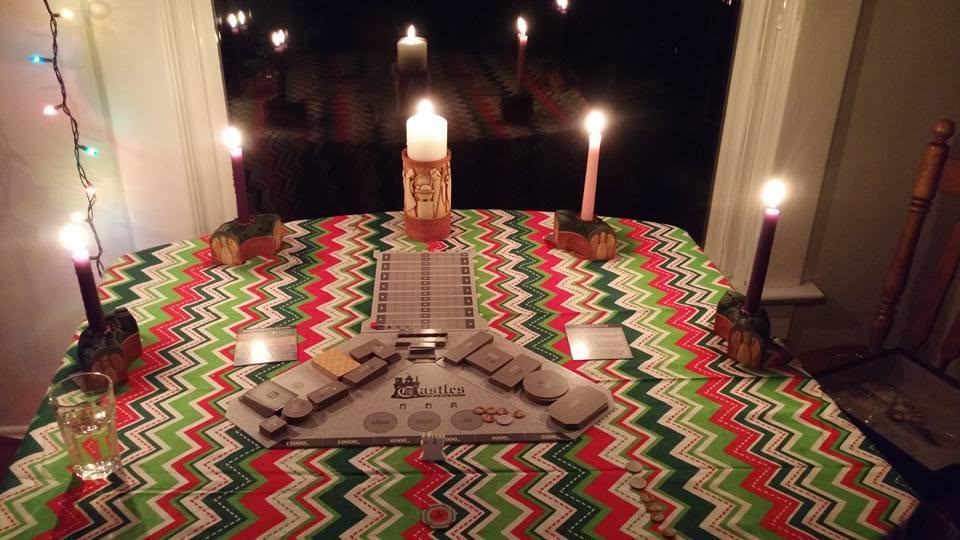
Do you wanna build a castle?
With that song stuck in your head let’s talk talk about a phenomenal game of interior design and market manipulation. Castles of Mad King Ludwig has players fighting over parlors and dungeons to make their own personal fortress of not-quite-solitude for fun and points. When I first moved back to Ohio and hadn’t made friends in the gaming scene, I spent many quiet hours playing this game by myself. The above pictured shrine to my loneliness is testament to this strange period and the game that got me through it.
In Castles you are designing sumptuous structures by purchasing the available rooms and slotting them into your ever-growing stonework amoeba. All players begin the game with a humble foyer, a wad of cash, and some secret scoring objectives. Maybe you want to fill your castle with kitchens or with circular rooms; either can be a path to sweet sweet victory points at the end of the game. In addition to these hidden goals, the king will have some public objectives it behooves you to chase after. These can be specific shapes or types of rooms and they’ll provide you and your architectural competitors with an open challenge you can fight over or ignore in favor of less obvious paths to victory. Every room is worth points and many rooms provide a bonus or penalty for being next to other types of rooms so configuring the right placement is key.
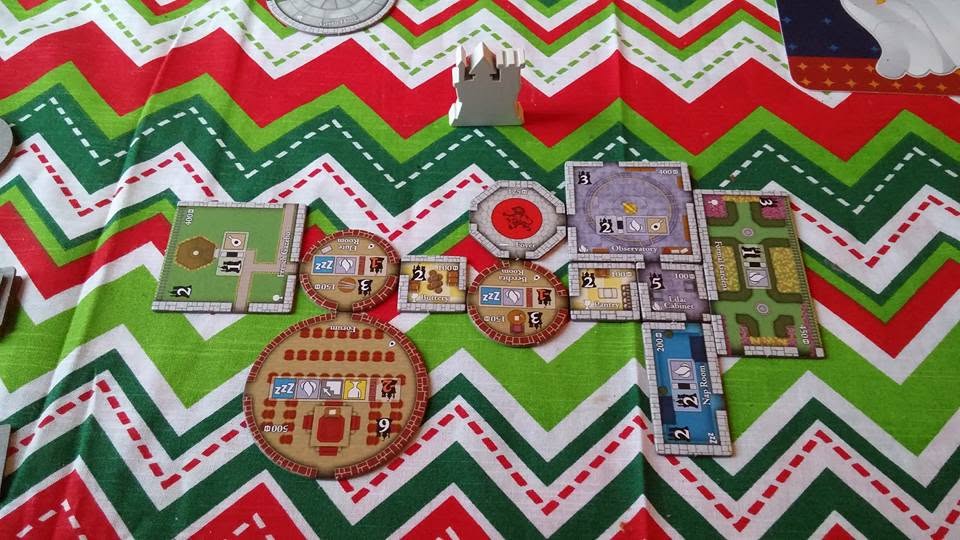
Every round, one player will act as a chief architect and will determine the price of the available rooms. The other players will go around choosing whether to purchase these rooms or pass for cash. Any money they spend this round goes to the chief architect and is the primary way of earning money which creates a fantastic crux of player interaction. The architect wants to both maximize how much money they’ll have to spend not only on their turn but on other players’ turns but they also want to make sure they’re not overpricing things so much that players choose to just pass for cash. As for the other players they might have the money to buy high scoring rooms but are going to be wary of handing huge wads of cash to this conniving rival so might forego an expensive, optimal room for a so-so cheaper one. In a game that largely consists of bending over your little castle floorplan rotating pieces to fit just so, this mechanic does a phenomenal job of creating tension and conflict.
As rooms go down, doorways open up to allow for the castle to spread in different directions. These doorways can be bricked up by a wall but if a room manages to have all their doors successfully used then it unlocks an extra bonus depending on the room type. Gardens provide cash, kitches give you an extra turn, living rooms shoot out extra points, etc. Weighing the value of chasing these bonuses vs the flexibility of placing a room so it fits just so is another juicy puzzle this game provides. As castellans have known for centures, corridor management is a key skill.
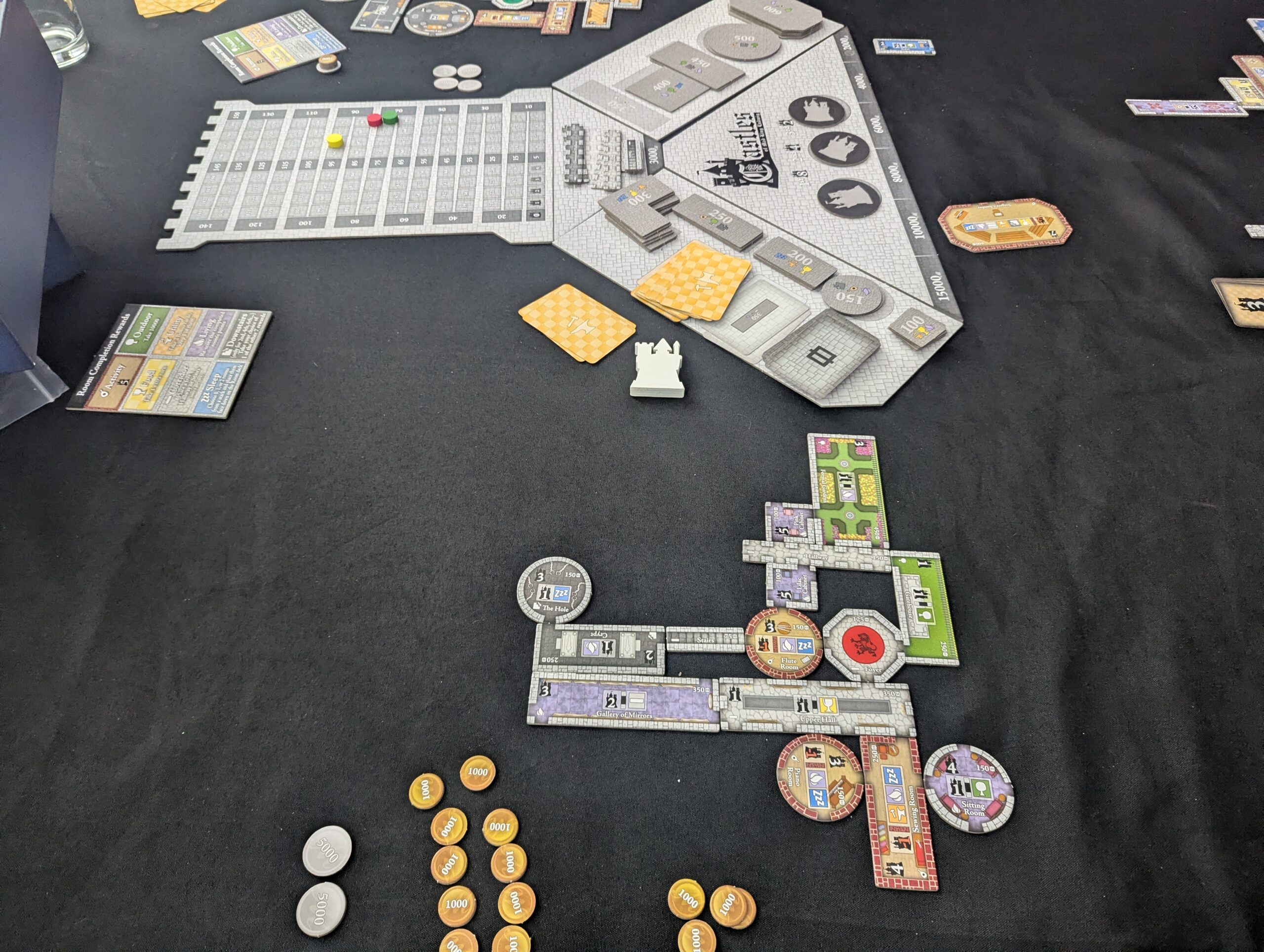
Once all the rooms are down and the game is over, players score and determine victory but more importantly take a moment to look at the bizarre castles they’ve provided for imagined teutonic aristocrats. Is there anywhere to sleep? Is it largely a warren of sub-basements? The mind boggles at the logistics but a canny dungeon master could take notes and provide a truly memorable dungeon delving adventure for their friends. Truly a game that keeps on giving.